

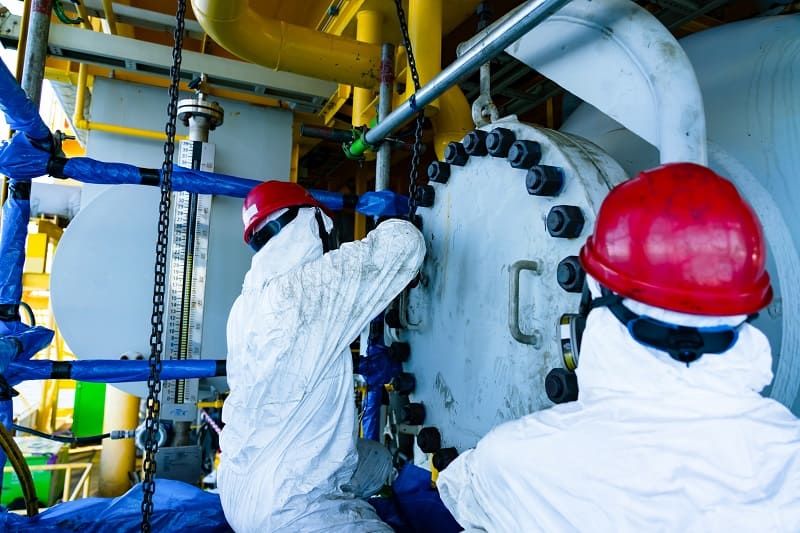


Emergency tank cleaning rarely becomes the first plan. It usually becomes the last available move after buildup, delayed maintenance, and industrial tank overflow warnings have already started stacking up. Once emergency tank cleaning is on the table, spill prevention is often under pressure too, because the tank is no longer behaving like a controlled storage system.
That shift matters fast. A tank that loses working volume, sends residue downstream, or leaves operators guessing about levels can drag production into downtime and push safety decisions into a tighter window.
1. Lost Capacity Starts Showing Up In Operations
One of the clearest signs that emergency tank cleaning is close is a tank that no longer performs as its nameplate suggests. Hidden buildup steals usable space long before the shell looks dramatic from the outside.
Operators usually see the effects before they see the cause. They notice batch timing drifting, pumps pulling unevenly, transfer lines clogging, mixers working harder, and level readings no longer matching what crews expect to find. That is often the point where scheduled industrial tank cleaning turns into emergency tank cleaning, because the tank has stopped acting predictably.
The warning gets louder when the same vessel keeps generating maintenance calls. Maintenance teams often see repeated work on filters, pumps, valves, or downstream equipment when material that should have been removed earlier is still in the system. A plant that treats those repeat failures as isolated headaches can miss the larger pattern.
That larger pattern is why scheduled industrial tank cleaning works best before the residue starts driving decisions for the whole system.
2. Industrial Tank Overflow Stops Feeling Theoretical
A second sign is when an industrial tank overflow moves from a remote possibility to a near miss. Operators may see high-level alarms tripping more often, stained containment, residue near vents, wet pads around fill points, or unexplained liquid in diked areas once the margin for error has narrowed.
For covered oil storage sites, the EPA says Spill Prevention, Control, and Countermeasure Plans are meant to prevent oil from reaching navigable waters and adjoining shorelines. The EPA also says secondary containment for bulk storage must be sized for the largest container and enough freeboard to hold precipitation.
Those requirements do not tell a facility when sludge has reached a tipping point, but they do show why spill prevention gets fragile when a tank is allowed to foul. Once operators are relying on perfect timing, constant watchfulness, or manual workarounds to avoid industrial tank overflow, emergency tank cleaning is usually closer than the calendar suggests.
Facilities that have already tightened up emergency spill response often recognize that pattern quickly, because the same visual clues that show up before a release tend to show up before a rushed tank cleanout as well.
3. Residue Changes The Safety Profile
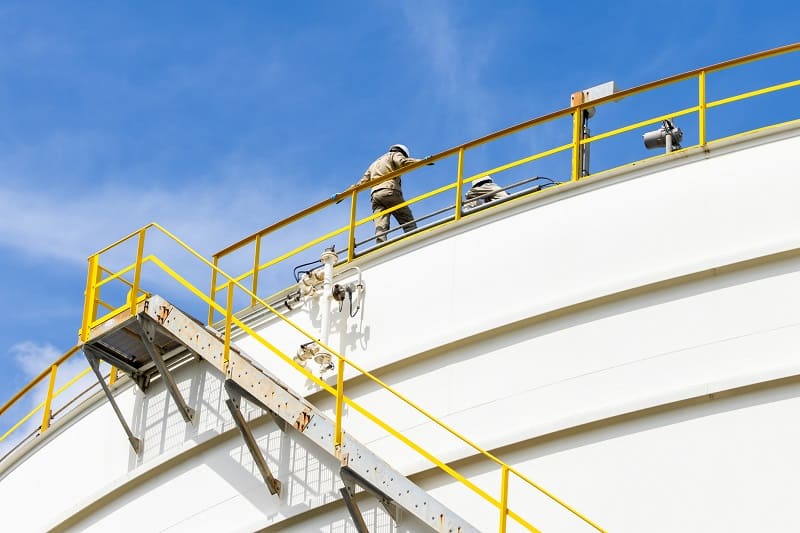
A third sign appears when the cleaning method itself starts looking more dangerous than the old plan assumed. Storage tanks taken out of service for cleaning are often treated by OSHA as permit-required confined spaces, which means the job can shift from a simple removal task into a tightly controlled entry.
That matters because residue changes atmosphere, footing, visibility, and access all at once. OSHA’s permit space rule puts oxygen deficient atmosphere below 19.5% oxygen by volume and requires pre-entry atmospheric testing, followed by testing or monitoring during entry operations.
An operation that suddenly needs extra isolation, ventilation, monitoring, rescue planning, or waste staging is no longer dealing with an ordinary cleanout. It is dealing with emergency tank cleaning conditions that have been building quietly inside the vessel.
That is one reason industrial confined space cleaning and tank work should be treated like specialized maintenance, not a side task squeezed into a busy shift.
4. Protection Layers Start Carrying Too Much Of The Load
The fourth sign is subtler, but it may be the most dangerous. The tank only stays under control because alarms, operator rounds, interlocks, and improvised workarounds are doing all the heavy lifting that clean internal conditions used to handle.
The Chemical Safety Board found in its CAPECO investigation that multiple layers of protection, such as an independent high-level alarm or an automatic overfill prevention system, likely would have prevented the massive release. That finding was about a catastrophic event, but the lesson applies earlier, too. When one sticky gauge, one delayed round, or one slow transfer starts looking like the only thing standing between routine operations and industrial tank overflow, the tank has already become a spill prevention problem.
At that stage, emergency tank cleaning is less about appearance and more about restoring control. Cleaning exposes the surfaces that need inspection, removes the residue that distorts readings, and gives the operating team a clearer picture of what the vessel is actually doing.
Heavy buildup often pushes facilities toward vacuum trucks because thick liquids, sludge, and mixed debris do not always move cleanly through ordinary pump-out methods.
Emergency Tank Cleaning Should Reset The Margin
Emergency tank cleaning should do more than empty a vessel and send everyone back to work. The real payoff is getting back usable volume, clearer inspections, steadier transfer behavior, and better spill prevention discipline before the next upset arrives.
A strong closeout also captures what the tank revealed. Those records should capture corrosion, unusual solids, water intrusion, residue around vents, and overflow staining, because they shape the next shutdown plan and help support a tighter facility environmental compliance plan instead of another rushed response.
Emergency Tank Cleaning Works Best Before The Fifth Sign
Emergency tank cleaning costs less in disruption when it happens after a warning sign, not after a release, rescue, or full stoppage.
Environmental Remedies supports industrial facilities across the Southeast with tank cleaning, waste transportation, industrial services, and treatment coordination when conditions move past routine maintenance.
Reach out today to talk through an emergency tank cleaning response before the next industrial tank overflow turns a spill prevention warning into a harder cleanup.