

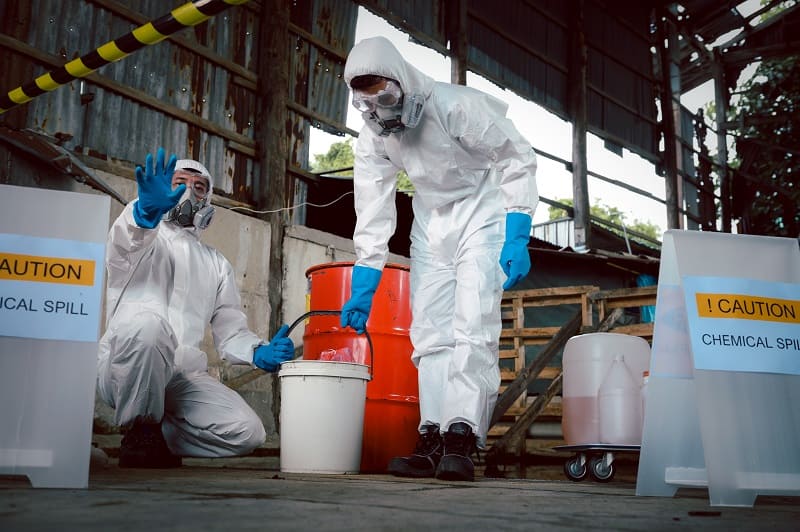


Industrial operations handle materials that leave no room for hesitation. When a spill occurs, the outcome depends on seconds and skill, and the precision of your emergency spill response decides whether the incident remains under control or spirals into an environmental and financial crisis.
A structured hazardous waste response plan for a chemical spill cleanup, paired with a trained team prepared to execute it flawlessly, transforms potential chaos into containment. Readiness protects more than assets; it safeguards people, operations, and the ecosystems that surround them.
Why Every Minute Counts During an Emergency Spill?
Spills at industrial facilities happen more often than most expect. Nationwide data reveal that, on average, a chemical spill or fire occurs every two days somewhere in the United States. The frequency alone points out the need for readiness, but the true impact runs far deeper.
EPA assessments indicate that property losses from off-site chemical releases amount to billions, while surrounding property values can decline by 2 to 3% following major events. Those numbers tell only part of the story.
Cleanup efforts rarely end once the flames are out or the leak is contained. Hazardous waste responses can halt production for weeks, consuming manpower and coordination between facility teams, environmental agencies, and specialized contractors. The disruption is often total.
For operations handling hazardous materials, wastewater, or industrial byproducts, emergency spill response must be integrated into the day-to-day management process.
Building an Effective Emergency Spill Response Program That Works When It Matters
A strong spill response plan begins long before an alarm sounds. The EPA, OSHA, and RCRA all require facilities to maintain records of how their chemical spill cleanup is carried out, how they respond to hazardous waste, and how they work with first responders.
High-performing plans for environmental emergencies consistently feature a few essential pieces that drive measurable outcomes, including:
– Hazard and Material Assessments: The identity, hazard classification, and precise storage location of each chemical used or stored within a facility should all be listed in detail. An extra duty falls on facilities that produce hazardous waste: keeping this information in a Quick Reference Guide that emergency responders can access as well as having a formal contingency plan on hand.
– Defined Roles and Responsibilities: A strong emergency response plan is clear and direct. It specifies who contacts local officials, who takes command when a crisis hits, and which crews move in to contain the incident and handle cleanup. No guessing. No overlap.
– Communication and Notification Systems: An effective emergency spill response framework is built on internal alarm systems, up-to-date lists of emergency contacts, and set ways to work with fire departments and environmental agencies.
– Training and Drills: Employees involved in emergency response must be trained according to OSHA’s HAZWOPER standard, which outlines specific qualification levels from basic awareness to full incident command. Regular annual refresher sessions reinforce those skills to keep response teams sharp, confident, and compliant with federal safety requirements.
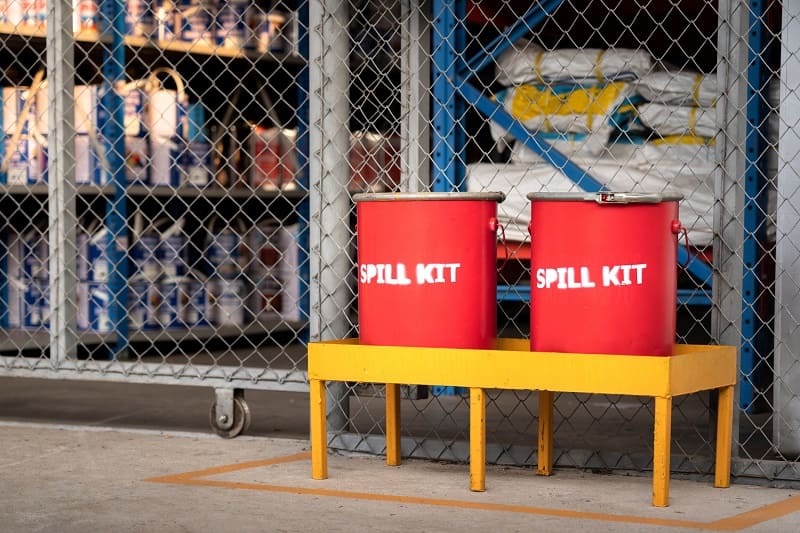
– Containment and Cleanup Equipment: It is important to place drain covers, pumps, absorbents, neutralizers, and spill kits close to high-risk locations. Employees must be able to use them safely and efficiently.
Facilities dealing with significant volumes of oil or hazardous materials must think ahead about worst-case scenarios, full containment plans, trained crews, and stocked resources. Every measure counts. Every detail matters. Because a plan isn’t a theory; it’s what stands between control and chaos.
How Hazardous Waste Response Fits Into Everyday Operations?

Emergency response doesn’t exist in isolation. It connects directly to how waste is generated, stored, and transported.
Large quantity hazardous waste generators under RCRA must prepare for fires, explosions, or accidental releases that could threaten health or the environment. Their plans must describe evacuation routes, emergency equipment, and coordination with hospitals and local emergency responders.
Even smaller facilities can benefit from adopting similar standards. Preventive maintenance on tanks, hoses, and containment systems limits the number of incidents that escalate into full-scale environmental emergencies.
When a spill does happen, proper classification and documentation of all cleanup materials as hazardous waste are required. Everything from contaminated soil to used absorbent pads must be labeled, stored, and shipped under approved procedures. Doing so keeps facilities compliant and reduces long-term liability.
Responding Effectively When Spills Happen
When an unexpected release occurs, the first step is always to protect people. Workers should know when to evacuate or shelter in place and how to isolate the affected area. Once personnel are safe, response teams can focus on identifying the material, stopping the source, and preventing the spread.
The sequence below reflects a framework many industrial sites rely on to keep operations efficient and consistent:
- Assess the Situation: Determine if the incident can be safely handled by on-site staff or if it qualifies as an emergency spill requiring external support. Factors such as volume, toxicity, volatility, and fire risk matter.
- Activate Communication Protocols: Alert internal coordinators first. Then notify the required external agencies. For qualifying releases, report to the National Response Center immediately under federal law. Time, location, substance, estimate, actions taken. Log every call.
- Contain and Control: Use absorbents, booms, or barriers to prevent the spill from getting to drains or soaking into the ground. Start at the outer edge, move carefully, tighten the circle, and contain the source. Prioritize control over contact.
- Cleanup and Disposal: Quickly gather up all the contaminated materials and put them in the right containers for hazardous waste disposal. Label them clearly and handle them under applicable regulations
- Decontaminate and Restore: During chemical spill cleanup, make sure to clean all affected surfaces thoroughly. Test the air if there’s any chance of vapor or particulate risk. Inspect once more before clearing the area.
- Document and Review: Take note of what happened, how it was handled, and how much waste was handled. If a process or piece of equipment fails, update your spill plan.
Well-managed facilities treat every incident as an opportunity to improve. After-action reviews serve as a reflection point, analyzing what succeeded, what failed, and where procedures can be sharpened. These evaluations go beyond documentation; they shape stronger response protocols, tighter communication, and smarter deployment of resources.
Moving Forward With Emergency Spill Response That Puts Safety and Sustainability First
Every emergency spill response should embody safety, accuracy, and environmental care, which are the same principles that define Environmental Remedies on every project surrounding environmental emergencies.
With over three decades of experience in industrial cleaning and waste treatment, our team unites skilled personnel, proven processes, and advanced technology to manage even the most demanding incidents with efficiency and control. Connect with our team to enhance your response skills, maintain operational safety, and fulfill your commitment to making the world a cleaner, safer place.