

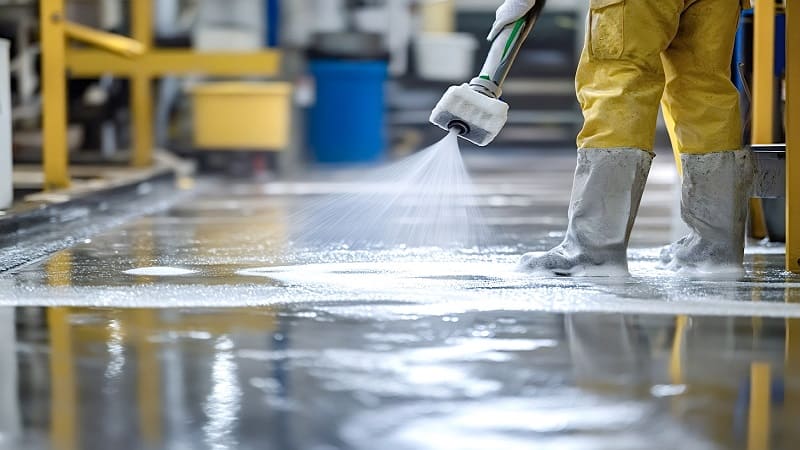


Industrial pressure washing tends to get labeled as a cosmetic clean, yet the safety payoff is where the real value shows up.
When industrial pressure washing is planned like a controlled maintenance activity, residues that quietly change traction and exposure conditions get removed before they trigger incidents.
Early improvements often start with surface cleaning in the places people and forklifts touch every day, then extend into higher-risk zones like drains, loading areas, and equipment exteriors. Strong programs treat the work as a safety intervention, not a last-minute cleanup.
Safer Footing Starts With What Sticks To Floors And Walkways
Slips and falls rarely feel dramatic at the moment they begin. A foot lands where it always lands, then traction behaves differently than expected because a thin film has built up over days or weeks.
Oils, greases, process residue, biofilm, and tracked solids can reduce friction even when the floor looks “mostly fine,” which is why walking surfaces can become unpredictable around pumps, sumps, trench drains, dock plates, and production corridors.
OSHA’s walking-working surfaces expectations are straightforward about controlling hazards like leaks and spills; the harder part is what plants see in the real world, where residue isn’t always a puddle you can spot and wipe up.
Industrial pressure washing helps when scrubbing, mopping, or spot treatment can’t break that bonded layer fast enough to keep traffic areas consistent. Film removal matters because it turns a variable surface back into a surface with predictable grip.
A smart plan also respects the short-term hazard created during cleaning. Wet-work windows create slip exposure if traffic control is loose or if a restart happens before drying and traction recovery.
Good work sequencing, clear exclusion zones, and a defined “return to service” moment reduce that risk while keeping production disruption bounded. Floor safety improves most when the residue gets removed, and the post-wash conditions get managed like part of the job, rather than an afterthought.
Plant Sanitation And Exposure Control Improve When Spray And Splash Are Managed
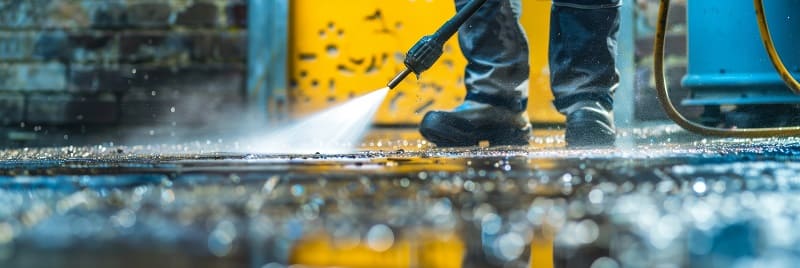
Safety and hygiene overlap in many facilities; the same soils that irritate skin, attract pests, or harbor microorganisms can also create handling hazards and cross-contamination pathways.
Plant sanitation programs often focus on food-contact controls in regulated environments, yet the broader lesson applies across industrial settings: soils left in drains, on floors, and on equipment exteriors don’t stay put, and people interact with those surfaces constantly.
Industrial pressure washing supports surface cleaning and plant sanitation by stripping buildup that turns “cleanable” surfaces into surfaces that resist routine wiping and create hidden reservoirs in corners, seams, and textured flooring.
Drains and surrounding concrete are common examples; residue accumulates where moisture lingers, then gets spread outward with traffic, hoses, and carts. High-pressure methods can introduce their own safety and exposure problems if aerosol and splash aren’t treated as controllable hazards.
Research on cleaning activities has shown high aerosol exposures during certain tasks, and high-pressure cleaning is frequently discussed as a contributor when the wrong method is used in the wrong location.
Aerosolized droplets can carry contaminants into adjacent zones, land on surfaces that were just cleaned, or raise respiratory and eye exposure during the work.
Better outcomes come from method selection and job controls that fit the environment. Lower-pressure approaches, foam application, or targeted rinsing can make sense where splash control matters.
Directionality matters too; spraying toward drains rather than across open work areas reduces spread, and isolating zones keeps traffic away from wet surfaces and airborne mist. Drying and ventilation planning helps because moisture left behind can recreate slip risk, encourage regrowth, and drive odor complaints that lead to rushed cleanup later.
Treating Industrial Pressure Washing Like A Power Tool Reduces Injury Risk
Pressure washing looks familiar, so teams sometimes treat it more like a basic housekeeping step. CDC safety guidance paints a different picture; high-pressure water can cause severe wounds, flying debris injuries, and electrical hazards, and some injuries can look deceptively small at first.
High-pressure injection injuries are a known example; a tiny puncture can mask deep tissue damage that worsens quickly without rapid medical evaluation. Injury prevention begins with respecting the equipment as a high-energy tool.
Stand-off distances, predictable nozzle selection, and line-of-fire rules reduce the chance of a hand, foot, or coworker ending up in the spray path. Barricades and spotters help in shared spaces, especially near docks, corridors, or active maintenance areas.
Hose management prevents secondary incidents such as trips, pulled fittings, or whip hazards when a connection fails. Electrical planning deserves equal attention.
Many washdowns occur near powered equipment, temporary lighting, or extension cords, and wet conditions increase shock risk when work areas aren’t set up carefully. Lockout and tagout may be needed for certain equipment cleaning tasks, and protecting panels, junction boxes, and sensitive controls reduces both safety risk and costly downtime.
PPE choices depend on the job, yet common sense applies: eye and face protection against splash and debris, footwear that supports traction during wet work, and protection against chemical exposure when detergents or degreasers are part of the process.
Work quality improves when the team can move confidently without rushing, and injury risk drops when the site is staged like a controlled maintenance activity.
When Residue Becomes A Fire And Explosion Conversation
Housekeeping stops being a “cleanliness” topic when combustible dust enters the picture. OSHA and safety investigations have repeatedly emphasized that dust accumulation and dispersion can set the stage for explosions; regular removal of deposits is part of prevention.
CSB communications and NFPA guidance often frame housekeeping as a major control because accumulated dust can become fuel when it gets disturbed. Industrial pressure washing fits into that discussion with a big caveat.
Water isn’t always the right answer for combustible dust hazards. Wetting dust can create a slurry that spreads, hides in cracks, corrodes surfaces, and later dries into deposits that are harder to remove, and some materials react poorly with water.
A risk-based approach matters; the cleaning method needs to match the hazard, the material, and the equipment in the area. Facilities gain safety value when pressure washing is used, where it reduces residue hazards without creating new ones, and when alternative cleaning methods handle dust-sensitive zones.
Clear scope boundaries, documented sequencing, and a plan for containment reduce surprises, especially when cleaning crosses between production areas, mechanical rooms, and outdoor loading zones.
Wash Water Control Protects People And Keeps Compliance Friction Low

Pressure washing mobilizes what’s on the surface into wash water. Oils, metals, process residue, and other pollutants can end up in runoff; onsite, that creates exposure and re-soiling risk, and offsite, it can trigger compliance problems if discharge reaches storm drains or surface waters.
EPA’s NPDES framework is the backdrop here; discharges to waters of the U.S. are regulated, and industrial stormwater rules treat many facilities as covered activities depending on operations and site conditions.
Operationally, wash water management is a safety practice, not just an environmental box to check. Containment prevents re-entrained contaminants from spreading back onto walkways, which helps keep traction consistent after the job.
Collection and proper disposal or treatment reduce the chance of pollutants migrating into storm infrastructure, and routing to sanitary sewer requires local rules to be followed. Planning that work up front helps avoid mid-job improvisation, where hoses get moved, berms get skipped, and hazards multiply.
A well-run job leaves surfaces cleaner, safer to walk on, and less likely to create recurring slick conditions because the waste stream gets handled responsibly instead of getting pushed to the nearest drain.
Industrial Pressure Washing That Makes Safety Feel Predictable Again
Safer facilities rarely hinge on a single improvement; day-to-day risk drops when residue, moisture, and exposure conditions stay predictable.
Industrial pressure washing supports that goal when it’s paired with controlled work zones, splash and aerosol management, and proper wash water containment. Reach out to Environmental Remedies to talk through a pressure washing plan built around safety, sanitation, and responsible waste handling.