

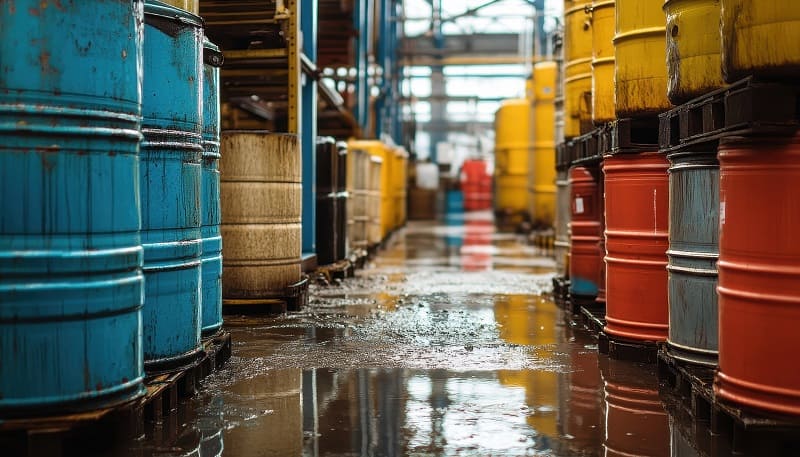


Industrial spill prevention rarely fails because a facility lacks a binder. It usually fails because spill containment, industrial cleaning, and response roles break apart during busy shifts.
A good plan pulls those pieces back together before a release reaches a drain, a trench, or a traffic path. Industrial spill prevention affects uptime, worker safety, reporting pressure, and long-term environmental risk at the same time.
Facilities that treat industrial spill prevention as part of plant maintenance make faster decisions when something goes wrong. Staff know where materials sit and how far a small leak can travel before it becomes a larger problem.
Industrial Spill Prevention Starts Before The First Leak
A workable plan begins with a hard look at where a release is most likely to start. Storage pads, hose connections, transfer stations, loading points, floor drains, and outdoor staging zones deserve the first walkdown because they combine movement, volume, and exposure.
For oil storage sites covered by the SPCC rule, the written plan has to be prepared and implemented by the owner or operator and kept at normally attended facilities. That requirement turns planning into operating detail.
The first walkdown should also mark where drains lead, where forklifts cross chemical routes, and where spill kits can be reached without sending a worker back through the release zone. That kind of mapping gives industrial spill prevention a practical shape instead of leaving it as a policy statement.
Spill Containment Has To Match Real Site Conditions
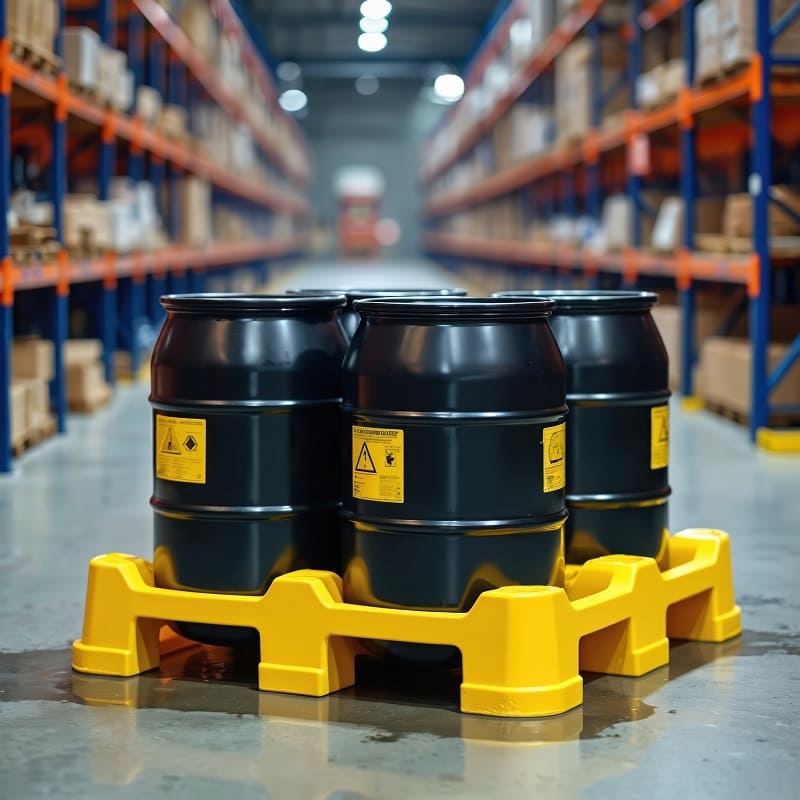
Secondary containment is often treated like a fixed box to check, yet the design still has to reflect what is stored, how the area drains, and what rainfall can add to the volume. EPA says bulk storage installations under SPCC need containment for the largest single container plus freeboard for precipitation.
That standard matters because a pad that looks adequate in dry weather may fall short during transfer work, washdown, or a storm. Good industrial spill prevention planning also asks what happens after spill containment fills and how the recovered waste is staged for compliant handling.
Outdoor operations need attention because leaks and housekeeping failures can become stormwater problems fast. Facilities that want lower environmental risk should review where materials sit and how runoff leaves the property.
Training And Documentation Keep Small Releases From Growing
Equipment alone does not carry a prevention plan very far. People need to know what a small loss looks like in its first minutes, where absorbents and drain covers are stored, when to isolate a process, and who has the authority to escalate.
Those decisions should line up with the facility’s emergency spill response program instead of competing with it. Confusion during the first few minutes can waste the small window when spill containment still has the best chance to hold the problem in place.
RCRA rules for large quantity generators require a contingency plan designed to minimize hazards to human health and the environment from fires, explosions, or unplanned releases of hazardous waste. Even facilities outside that trigger point can borrow the same discipline by writing down actions, contacts, equipment locations, and shutdown steps before an event tests memory.
The Chemical Safety Board says lessons from at least 16 investigations point back to preparation, training, communication, and emergency exercises. Regular drills expose delays, bad assumptions, and missing tools before a real spill makes those gaps expensive.
Wet walking surfaces belong in the same conversation. A leaking pump or poorly managed cleanup can turn environmental risk into an injury risk in the same hour, which is one reason plant maintenance and spill planning should not be managed in isolation.
Planned Industrial Cleaning Supports Faster Spill Control
Prevention planning gets stronger when daily conditions stay predictable. Residue around pumps, sludge in pits, overfilled separators, and neglected trenches all make it harder to see fresh losses and harder to move quickly when spill containment has to be deployed.
That is why many facilities connect industrial spill prevention to scheduled cleaning rather than leaving it inside the EHS file cabinet. Routine industrial sump cleaning gives operators a cleaner baseline before a loss starts to spread.
Regular oil-water separator maintenance helps teams spot overflow conditions and buildup sooner. A current environmental compliance plan shortens the path from discovery to action because people know where responsibilities sit.
Response capacity matters too. Access to vacuum trucks, staged containers, and disposal coordination can keep a contained release from sitting long enough to create odor, overflow, or added environmental risk.
Facilities that work through these details ahead of time write better callout triggers. The plan can define who gets called when containment volume is exceeded, when a drain is threatened, or when cleanup will interfere with production.
Industrial Spill Prevention Works Better When Operations Own It
The strongest plans are easy to use under pressure. They connect site maps, spill containment equipment, housekeeping expectations, industrial cleaning schedules, and vendor call lists into one operating document that supervisors can act on without debate.
That kind of clarity helps industrial spill prevention stay active after the annual review. It also lowers environmental risk because small leaks get noticed sooner, cleanup starts faster, and waste handling decisions are made with better information.
Industrial Spill Prevention Needs A Practical Partner
Industrial spill prevention works best when planning, spill containment, and plant maintenance move together instead of living in separate binders. Facilities that treat prevention as an operating discipline usually cut response time and lower environmental risk.
Environmental Remedies help facilities build practical industrial cleaning and waste handling support around that reality, from scheduled cleanouts to rapid field response.Reach out to Environmental Remedies for industrial spill prevention support that fits the pace, waste streams, and risk points inside your facility.