



Heavy industrial facilities depend on cleaning methods that support uptime, safety, and long-term asset performance. Hydroblasting services have become a central part of that equation, especially where conventional mechanical or chemical methods fall short.
When gear becomes fouled or corroded, you need something that fixes it fast without wrecking your schedule. High-pressure water blasting for industrial cleaning cuts through tough buildup so lines, tanks, and floors get back to work with less mess and fewer issues.
The setup matters. Walk the area, mark hazards, stage barricades, confirm drains and capture, check the nozzles and pressure, and brief the crew. A few smart steps up front make the outage shorter and the follow-up work smoother.
Preparation for hydroblasting services plays a major role in the efficiency with which outages and follow-on work are executed.
How Hydroblasting Is Defined in Industrial Maintenance Settings
In heavy industry, hydroblasting services refer to the use of pressurized water to clean, strip, or prepare surfaces without introducing abrasive media.
Guidance from the Water Jetting Association breaks down pressure categories that help define what kind of equipment and containment a job requires:
|
Pressure Band |
Approx. Range (psi) | Typical Use |
|
Low-Pressure Cleaning |
Up to 5,000 |
General washdowns, light deposits |
|
High-Pressure Water Cleaning |
5,000–10,000 |
Industrial maintenance, piping, and vessels |
|
High-Pressure Water Jetting |
10,000–25,000 |
Coating removal, scale breakup |
| Ultra-High-Pressure Jetting | Above 25,000 |
Concrete removal, heavy coating stripping |
Industry data show that ultra-high-pressure systems can deliver cleaning power while using less than 5 gallons per minute, making containment simpler than in older high-flow approaches. Facilities in sectors such as refining, power generation, and manufacturing rely on these methods to remove corrosion, coatings, and deposits that compromise performance or impede inspection access.
Across refineries, power plants, manufacturing sites, and marine facilities, high-pressure water blasting removes scale, process residues, corrosion products, and failed coatings that interfere with performance or inspection.
Accuracy matters when discussing different methods. Get the labels right, and the choices get easier.
Waterjetting uses water alone. Wet abrasive blasting adds grit and compressed air, resulting in a mixed waste stream that requires different capture and disposal. Hydrodemolition is a cousin technique that uses controlled jets to strip out bad concrete while leaving sound sections in place.
Know these differences, and planning gets cleaner. You can pick hydroblasting services that hit the technical specs, meet environmental rules, and keep the job moving without surprises.
Why Hydroblasting Supports Reliability and Inspection Readiness
Maintenance programs often prioritize outcomes rather than techniques, and hydroblasting services support several outcomes that directly affect reliability and mechanical integrity. Fouling inside heat exchangers and process piping restricts flow and reduces heat transfer, leading to higher energy use and unplanned shutdowns.
Research on exchanger fouling shows economic losses can escalate quickly when deposits remain in place. When time is critical during turnarounds, high-pressure water blasting serves as an effective method for cleaning industrial spaces.
Keep surfaces clean if you want inspections to mean anything. Dirt, scale, and residue skew readings, hide defects, and throw off measurements. Clean first, then test. Results get sharper. Decisions get easier. Deposits left behind can hide under-deposit corrosion, pitting, or coating failures that compromise integrity.
Hydroblasting cleans surfaces completely without leaving behind any rough spots, which makes it easier for inspectors to see the conditions and take accurate measurements.
Hydroblasting helps you get there. It strips contaminants and loose coating without adding grit or heat, so inspectors see the metal, not the mess. For coating work, AMPP recognizes waterjetting as a valid path to specified cleanliness levels before application. Hit the target prep, control flash rust, and your coating has a fair shot at lasting.
While high-pressure water blasting does not create a new surface profile the way abrasive blasting does, it exposes existing profiles and removes contaminants that interfere with adhesion.
Planning around flash rust control and drying time becomes part of quality management rather than an afterthought.
How Pressurized Water Achieves Effective Cleaning
The effectiveness of hydroblasting services lies in how energy is delivered. Pressurized water exits specialized nozzles at velocities capable of shearing deposits from metal or concrete surfaces.
Adjustments to pressure, flow rate, nozzle design, and dwell time allow contractors to tune performance for each asset.
Tooling expands capability. Rotary heads clean tube interiors. Lances reach deep into vessels. Automated feeds improve consistency while reducing operator exposure. In tube bundle cleaning, repeated passes through each tube remove deposits without damaging metallurgy when parameters are controlled.
Industrial cleaning teams rely on testing and calibration because excessive pressure or improper angles can damage thin-wall piping. The difference between productive hydroblasting and hazardous outcomes often comes down to experience, control, and proper execution.
Safety Expectations Shape Professional Hydroblasting Programs
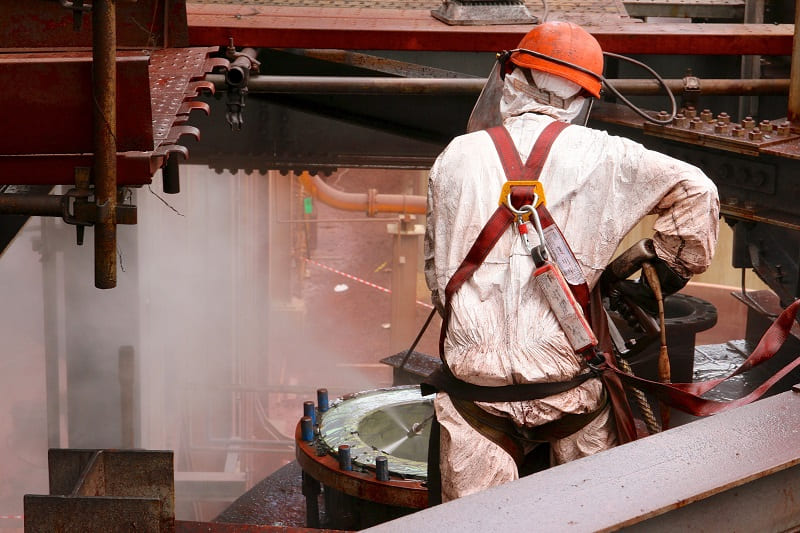
Any credible discussion of high-pressure water blasting addresses safety openly. Water under pressure can penetrate skin and underlying tissue, causing injection injuries that need to be treated right away.
Plan with real risks in mind: loud noise that’s damaging, reaction forces that kick back hard, slick footing, residues that irritate or poison.
There are some basic elements to keep in mind: trained crews, clear exclusion zones, deadman controls, and PPE matched to jet energy and the chemicals present.
Remote and robotic tools are showing up more often for heavy work, especially concrete removal or confined-space jobs. Greater distance means steadier results and lower risk, so safety and productivity move in the same direction.
Emergency response planning, including clear protocols for injection injuries, reflects the seriousness of the hazard rather than relying on assumptions.
Containment and Waste Control Define Project Success
Modern hydroblasting services encompass more than just the cleaning process itself. Water carries removed material wherever it flows, shifting challenges from airborne dust to waterborne waste.
OSHA notes that the difficulty of collecting contaminated water is a primary operational concern, which explains why containment is integral to the process rather than an add-on. Berming, vacuum recovery, filtration, and staged containers help keep projects predictable.
Regulatory pathways vary based on disposal or discharge methods. Wastewater routed to surface waters typically falls under NPDES permit coverage, while indirect discharge to municipal systems triggers EPA pretreatment requirements. Solid residues require accurate hazardous waste determinations under federal regulations.
Strong industrial cleaning programs include sampling, record-keeping, and planning for downstream treatment so that maintenance teams don’t face surprises when they have to shut down.
Hydroblasting Services That Support Heavy Industrial Maintenance Goals
Ongoing downtime pressure, combined with strict regulatory oversight, explains why hydroblasting remains a preferred maintenance solution across heavy industry. Facilities that prioritize reliable outcomes often choose partners who deliver these services through an integrated, end-to-end approach.
Backed by decades in the field, Environmental Remedies provides hydroblasting solutions designed to meet safety standards and operational demands. Begin a discussion with our team to understand how coordinated services can support both near-term outages and future maintenance needs.