

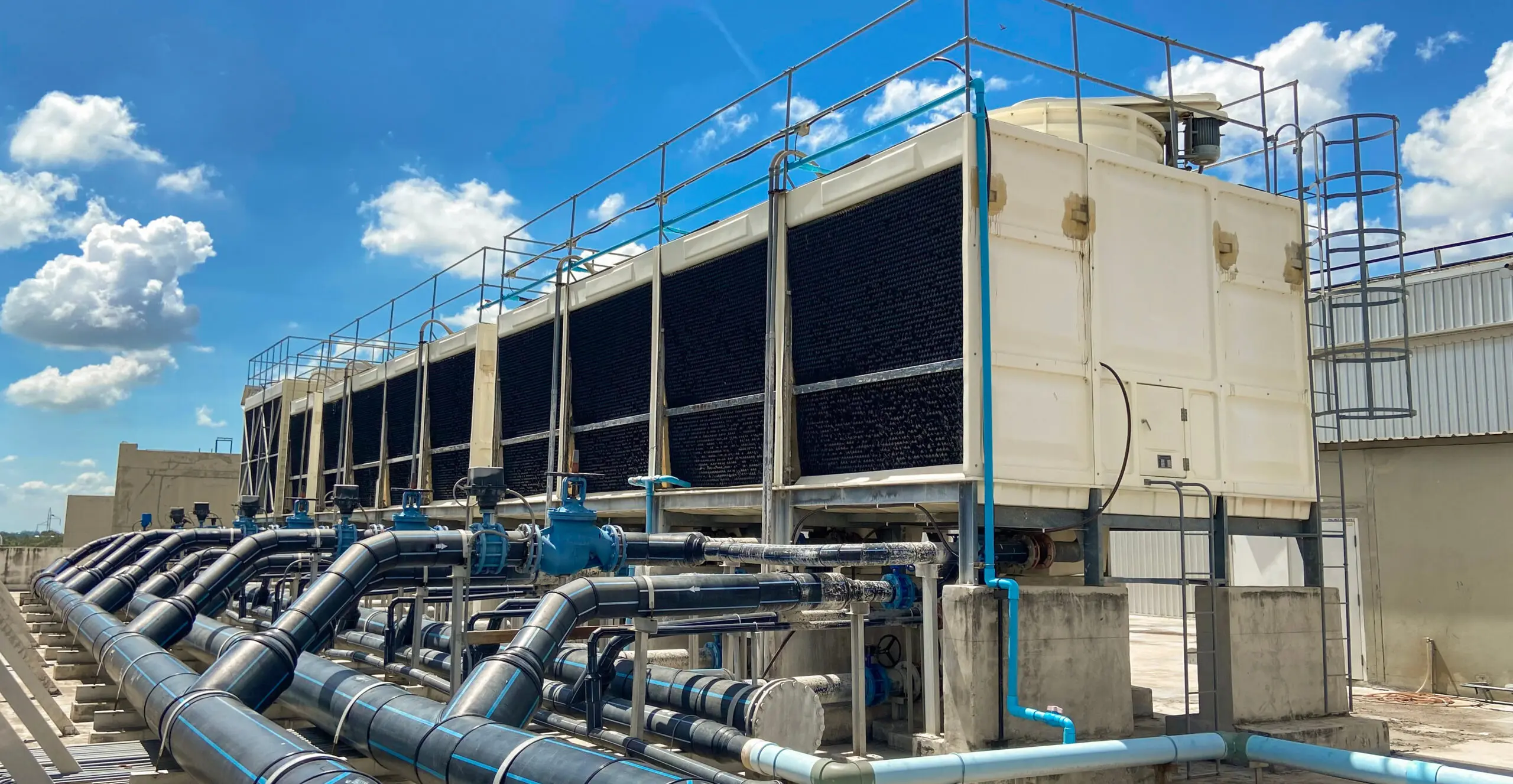


Data center wastewater treatment gets harder to manage when a stream looks harmless at first glance.
Flush water often sounds like clean water with a little dust in it, yet in live facilities and during commissioning, it can carry dissolved solids, metals, residual treatment chemicals, glycol traces, and the exact variability that makes wastewater treatment equipment perform unpredictably.
That matters for wastewater planning, for data center wastewater decisions, and for the wider data center environmental impact tied to water use and discharge.
Flush Water Usually Means A Stream That Picked Up Real Contamination
In data center work, flush water is usually the water removed when piping is flushed before startup, when closed loops are drained for service, or when cooling systems bleed water off to control dissolved solids. The term is practical rather than regulatory, but the treatment problem is real.
The Open Compute Project guidance treats flush water as something worth measuring for copper and microbial control during pre-commissioning, which signals a simple point: even startup water can pick up enough material to affect how it should be handled.
The EPA’s Quincy case study makes the same issue visible from another angle, explaining that as cooling water evaporates, dissolved solids concentrate and some water has to be drained and treated as blowdown.
Once water has moved through a tower, a loop, or a flush sequence, it is no longer just water. It becomes a process stream, and wastewater treatment starts to depend on what that stream picked up, how concentrated it became, and whether it stayed separate from other facility discharges.
Why Data Center Wastewater Treatment Gets Complicated Fast
Data center wastewater is often discussed as if it were one thing, even though the stream can change sharply depending on whether it came from cooling tower blowdown, a one-time piping flush, a drained closed loop, or maintenance water from side-stream filtration and cleaning.
That variability is exactly why wastewater treatment can feel straightforward on paper and messy in practice.
The same Quincy example shows how quickly that complexity moves beyond theory. Cooling-related industrial wastewater from data centers carried total dissolved solids at levels that created trouble for the city’s existing reclamation system, and the city ultimately built a separate industrial wastewater treatment plant to process that blowdown stream before reuse.
Flush water is not always a huge volume, yet even smaller discharges can become expensive when they are chemically mismatched with the receiving system.
Chemistry is part of the issue, but so is routing. A discharge that seems minor in one hour can interfere with a municipal system when concentrations spike, and federal pretreatment rules under 40 CFR 403.5 prohibit indirect discharges that cause pass-through or interference at a POTW.
That does not mean every flush event becomes a violation, but it means facilities need to know what is in the water before assuming it can be handled like ordinary building wastewater.
Closed-loop guidance from the University of Michigan makes that same operational logic plain. Loop liquids have to be evaluated before discharge; glycol-containing solutions cannot simply be sent to sanitary or storm systems, and flush water associated with glycol use has to be collected until concentrations are low enough for sanitary discharge under the applicable local conditions.
For data center wastewater, that is a useful reminder that maintenance water is often a waste-characterization problem before it becomes a hauling or sewer problem.
Why Data Center Environmental Impact Runs Through Water Decisions

Water use is now part of the data center environmental impact conversation, even when the public discussion starts with electricity. Cooling choices determine how much makeup water is needed, how much water is lost to evaporation, and how much concentrated wastewater remains to be managed.
The EPA’s new Water Reuse Action Plan 2.0 explicitly calls for reuse strategies that support data center cooling and industrial applications while reducing stress on drinking-water supplies.
Quincy’s reuse system shows what that looks like when operators treat data center wastewater as infrastructure rather than a side issue, building a dedicated path for treatment and recirculation instead of forcing the stream into a municipal setup that was not designed for it.
That is why flush water matters beyond one maintenance ticket. Every gallon that has to be dumped, hauled, segregated, or retreated affects the economics of reuse and the visible data center environmental impact around scarcity, discharge, and public trust.
Quincy’s closed-loop reuse project is useful here because it did not treat blowdown as an afterthought; it treated the wastewater stream as part of the infrastructure problem.
A better approach starts with stream separation. If startup flush water, chemical cleaning water, blowdown, and general sanitary flows are mixed too early, wastewater treatment options narrow fast. If those streams are characterized and routed intentionally, facilities have a better shot at reuse, pretreatment alignment, and lower disposal friction.
Wastewater Treatment Planning Works Better When Flush Water Is Segregated Early
The treatment answer depends on the stream, yet the planning principle stays fairly simple. Flush water should be evaluated based on source, chemistry, timing, and destination before it is released, reused, or hauled offsite.
That is where routine field discipline matters. A facility already thinking about industrial vacuum services is usually better positioned to keep odd streams from becoming emergency problems.
The same logic applies to centralized wastewater treatment when a site needs a defined path for offsite handling, reuse planning, or complex residual management.
Likewise, regular sump and pit cleaning helps keep contaminated water from hiding in collection points until the worst possible moment.
Sampling plans matter because wastewater treatment decisions made from appearance alone are weak decisions. Scheduling matters because a maintenance drain on the wrong day can collide with other plant flows.
Documentation matters because data center wastewater often has to satisfy internal EHS review, outside transport rules, local sewer expectations, and broader sustainability goals at the same time.
None of that makes flush water mysterious. It simply places it in the category where good wastewater treatment depends on separation, characterization, and realistic handling plans rather than assumptions.
Where Better Wastewater Treatment Starts
Flush water looks minor until it lands in the wrong tank, hits the wrong sewer, or raises the cost of reuse.
Data center wastewater treatment improves when facilities treat flush events as planned process streams, not leftovers, because that is how wastewater stays manageable and how the data center environmental impact tied to water use becomes easier to control.
Wastewater Treatment Planning That Fits Data Center Reality
Data center water systems create wastewater treatment questions long before a visible upset appears. Planning for flush water, blowdown, and loop drainage early usually makes later decisions cleaner and faster.
Environmental Remedies helps facilities think through wastewater treatment with practical field execution, from cleanup logistics to handling paths that fit real operations and discharge constraints.Reach out to talk with Environmental Remedies about wastewater treatment planning for flush water, data center wastewater, and the operational details that shape discharge, reuse, and cleanup decisions.