

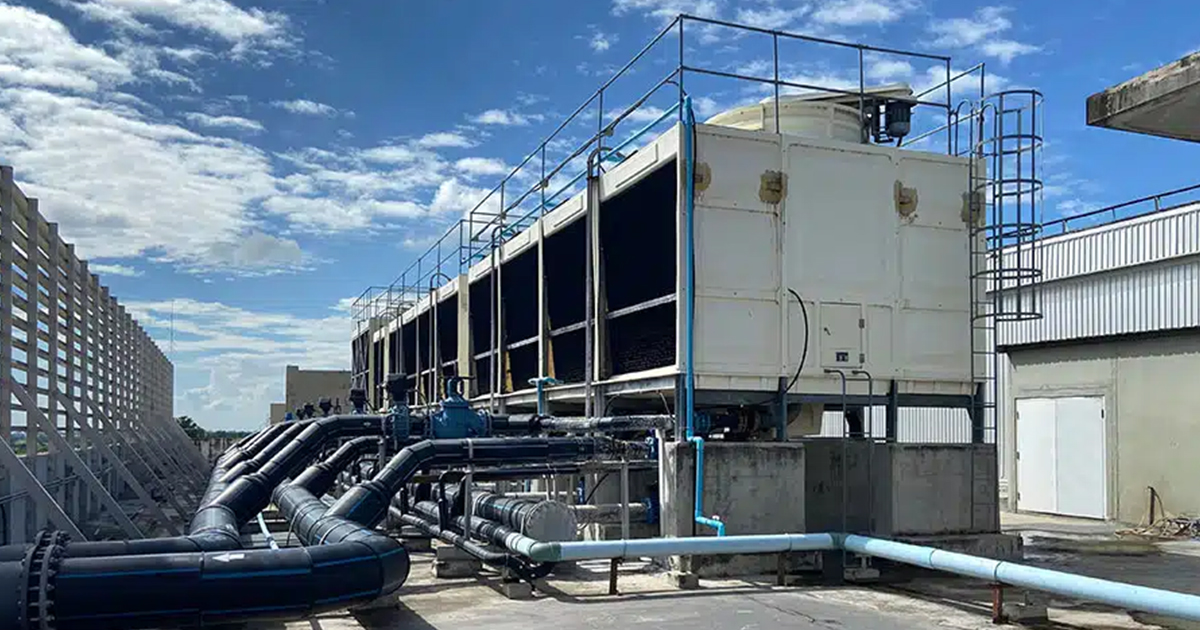


Data center wastewater disposal can look like a routine facilities task until a flush, drain, or cooling event creates a stream that does not behave like ordinary utility water. Environmental compliance can get harder when wastewater regulations, cooling tower water chemistry, and industrial waste management decisions are handled late instead of early.
Most risks are not dramatic at first. They show up as unclear discharge pathways, unexpected solids, residual treatment chemicals, storage gaps, or municipal questions that slow the work down after the water is already moving.
Flush Water Can Carry a Different Risk Than Its Appearance Suggests
Flush water may look clean after a pipe rinse or closed-loop service event, but appearance says very little about what is actually in the stream. Water can pick up construction debris, iron, copper, scale, biofilm, glycol traces, treatment residuals, cleaning residues, and suspended solids before it reaches a drain, tank, or truck.
That is why data center wastewater disposal needs to start with characterization instead of assumptions. A stream that seems harmless may need testing, segregation, temporary holding, pretreatment, or off-site handling before it fits the intended disposal path.
The risk grows during commissioning, maintenance, and seasonal cleaning because those events create wastewater in batches. Batch wastewater is harder to average into normal facility flows, especially when one flush contains concentrated residue that a steady operating stream would not carry.
Improper Disposal Can Put Environmental Compliance Under Pressure
Wastewater regulations usually care about what enters the system, where it goes, and what it may do after discharge. The EPA says industrial users must comply with applicable federal, state, and local pretreatment standards and requirements, and that requirement can apply even when the discharge is not part of daily production.
Improper data center wastewater disposal can create environmental compliance problems when wastewater enters a sanitary sewer, storm drain, retention system, or treatment route without the right review. The problem may be pH, metals, solids, oil, biological growth, treatment chemicals, or a blend of smaller issues that becomes harder to explain after discharge.
Federal pretreatment rules also show how volume can matter. Under 40 CFR Part 403, some industrial users may be treated as significant industrial users if they discharge 25,000 gallons per day or more of process wastewater to a publicly owned treatment works, apart from certain exclusions and local determinations.
That threshold is not a substitute for site-specific review, but it points to a practical concern. Large flushes, repeated service events, and multiple data halls can push wastewater regulations into the planning conversation much sooner than a facility team expects.
Cooling Tower Water Can Create Disposal Problems During Routine Maintenance
Water from cooling towers deserves special attention because its chemistry changes as the system operates. The U.S. Department of Energy describes a typical data center cooling arrangement that relies on evaporation from a cooling tower as the final stage of heat removal from the facility.
Evaporation removes heat, but it leaves dissolved minerals behind. As the loop continues, cooling tower water can become concentrated enough to raise scaling, corrosion, fouling, and discharge concerns.
Cooling tower water often includes treatment chemistry designed to protect the equipment, not to simplify disposal. Ohio EPA permitting material notes that cooling tower blowdown is commonly mixed with additives that may contain pollutants, while related boiler blowdown can contain high levels of total dissolved solids.
That is why evaporative cooling wastewater should not be routed by habit. Blowdown, flush water, and cleaning wastewater may need different handling even when they all originate near the same mechanical equipment.
Poor Planning Can Turn a Waste Stream Into an Operational Delay
Improper disposal is often treated as an environmental risk, but the operational risk can be just as damaging. A flush may need to stop if storage capacity is short, if sampling is incomplete, if hauling is not scheduled, or if the intended receiving point will not accept the stream.
Recent municipal experience shows how quickly a wastewater issue can move beyond a single facility. In 2026, the Cheyenne Board of Public Utilities reported operational disruptions resulting from the discharge of a biological contaminant by an industrial user, followed by investigation, remediation, and temporary reuse-system changes.
Data centers do not need an extreme event to feel the same kind of pressure. A late question from a utility, a failed sample, or a full holding tank can delay commissioning, maintenance, or cooling system cleaning while the facility is trying to protect uptime.
Temporary waste storage capacity becomes part of the risk calculation. If water cannot leave the site when planned, tanks, vacuum boxes, tanker access, and staging space may decide whether work continues or pauses.
Stronger Industrial Waste Management Starts Before the Flush
Better planning starts when facility, EHS, construction, and mechanical teams agree on how water will move before work begins. The plan should identify likely wastewater streams, expected volumes, sampling needs, holding points, transportation steps, and disposal routes.
Early planning also helps separate cooling tower water from other wastewater. Combining streams too soon can make industrial waste management harder because one variable, such as high solids or residual chemistry, can change the treatment profile for the full volume.
The same logic applies to flush water from commissioning. Water used to clear new piping, rinse loops, or prepare closed systems can carry enough variability to deserve its own handling plan before it is mixed with routine wastewater.
Strong documentation supports environmental compliance without turning the project into paperwork for its own sake. Sampling records, waste profiles, manifests, discharge communications, and disposal confirmations create a clearer trail if wastewater regulations or utility questions come up later.
A reliable plan should also connect disposal strategy with waste transportation. Industrial waste management can break down when treatment decisions are sound, but trucks, containers, access points, or receiving capacity are not ready when the flush begins.
Make Data Center Wastewater Disposal Easier to Control
The disposal work is easier to manage when wastewater regulations, cooling tower water chemistry, environmental compliance expectations, and industrial waste management steps are addressed before water leaves the system. Improper disposal can create cost, delay, utility, and documentation problems that outlast the maintenance event itself.
Our team supports data center teams with wastewater treatment, disposal coordination, hauling, storage, and industrial service support for flush water, cooling systems, and related non-hazardous waste streams.
Reach out to Environmental Remedies to plan data center wastewater disposal before the next flush creates a disposal problem.
Frequently Asked Questions
What is data center wastewater disposal?
Data center wastewater disposal involves collecting, evaluating, transporting, treating, or disposing of wastewater generated from cooling systems, equipment flushing, cooling tower maintenance, and related facility operations in accordance with applicable environmental requirements.
Why can’t cooling tower water always be discharged directly?
Cooling tower water may contain concentrated minerals, corrosion inhibitors, biocides, suspended solids, or other treatment chemicals that require evaluation before discharge or disposal.
What regulations affect data center wastewater disposal?
Requirements can include federal pretreatment regulations, state environmental rules, local sewer authority requirements, and site-specific discharge permits depending on the wastewater characteristics and disposal method.
Why is wastewater characterization important?
Characterization helps determine the appropriate handling, treatment, transportation, or disposal method while reducing the risk of environmental compliance issues or unexpected project delays.
How can facilities reduce wastewater disposal risks?
Planning, sampling wastewater, coordinating transportation, documenting disposal activities, and working with experienced wastewater management providers can significantly reduce operational and regulatory risks.