

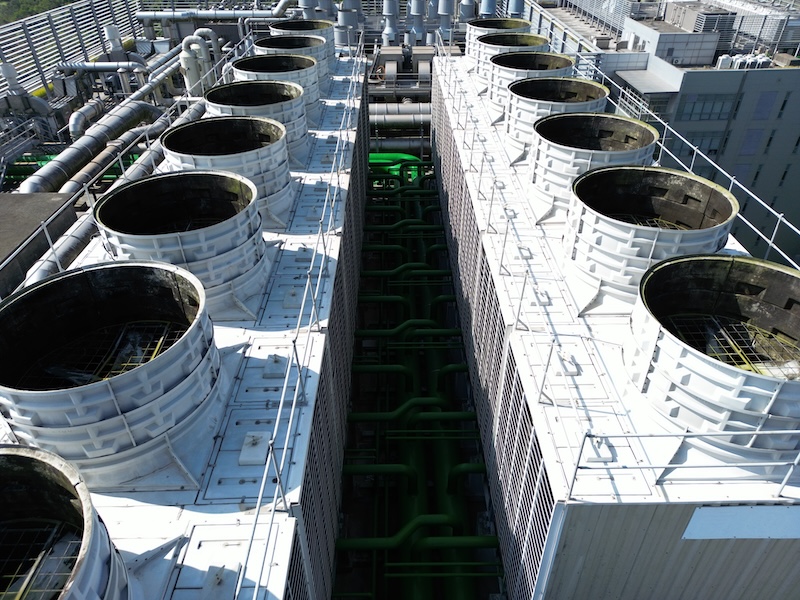


Evaporative cooling wastewater can be easy to underplan when a facility is focused on uptime, heat load, and energy performance. Water cooling in data centers also creates a second operating question: where does the used water go, and what level of wastewater treatment will it need before reuse, discharge, or off-site handling?
Data center water usage keeps drawing attention because cooling is no longer a background utility issue. Berkeley Lab notes that direct water consumption in data centers is generally tied to cooling requirements, while indirect water consumption can also be connected to power generation.
Why Data Center Water Cooling Creates Industrial Wastewater
Evaporative cooling removes heat by using water as part of the cooling process. In a cooling tower arrangement, warm water moves through the system, some of it evaporates, and the remaining water keeps recirculating so the system can continue moving heat away from equipment.
The efficiency benefit is the same reason the wastewater issue appears. The U.S. Department of Energy explains that water use in cooling towers comes mainly from evaporation, while a portion is drained as blowdown to control dissolved mineral buildup in the recirculating loop.
As evaporation continues, minerals, treatment chemicals, suspended solids, and other constituents can become concentrated. The remaining water cannot stay in the system forever without raising scaling, corrosion, fouling, and operational concerns.
That drained water is the part that facility teams need to plan around. It may look like a routine utility stream, but it can still require characterization, temporary storage, hauling, pretreatment, or coordination with discharge requirements.
How Cooling Tower Blowdown Impacts Data Center Water Usage
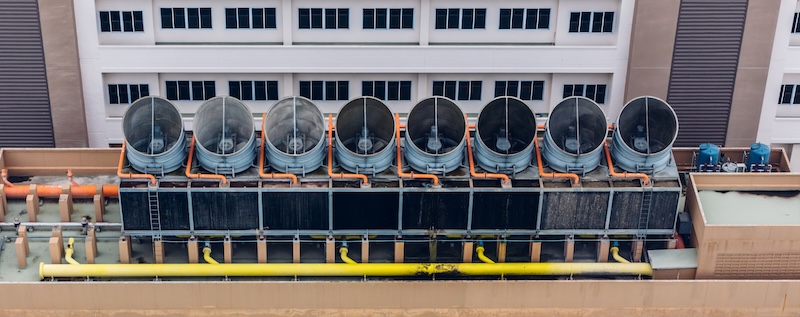
Cooling tower blowdown sits at the center of the after-use problem because it is tied directly to system chemistry. The EPA WaterSense cooling tower guidance explains that water leaves a cooling tower system in four ways, including evaporation, blowdown or bleed-off, drift, and leaks or overflows.
Higher cycles of concentration can reduce blowdown volume, but the smaller discharge stream may contain higher concentrations of dissolved solids. Lower cycles may create a larger wastewater volume, but with less concentration per gallon.
That balance matters for data center water usage because water conservation and wastewater handling are connected. A facility can lower makeup water demand and still create a waste stream that needs careful treatment planning.
Cooling tower blowdown can vary depending on source water, chemical treatment program, tower operation, season, and heat load. Data centers that scale fast or add higher-density computing loads may see wastewater assumptions change as cooling demand grows.
Why Data Center Wastewater Treatment Planning Should Start Early
Wastewater treatment should not be treated as a final housekeeping task after the cooling design is already set. Early planning gives engineering, facilities, and environmental teams a clearer picture of water volumes, expected chemistry, collection points, and disposal or reuse options.
The EPA says the NPDES program establishes discharge limits and conditions for industrial and commercial sources, with requirements based on the facility activity and the receiving water or treatment system. Permit needs and local sewer rules depend on where the wastewater goes, so operators should verify requirements before assuming a discharge path.
Planning also matters because data center water cooling can create intermittent peaks. Maintenance cleanouts, seasonal load changes, tower treatment adjustments, or unplanned draining can produce wastewater volumes that do not fit the average-day estimate.
Those spikes affect tank capacity, hauling schedules, sampling plans, and treatment readiness. A practical plan should account for the steady stream and the irregular events that can create a backlog if nobody has planned the next step.
Water Reuse and Wastewater Treatment Strategies for Data Center
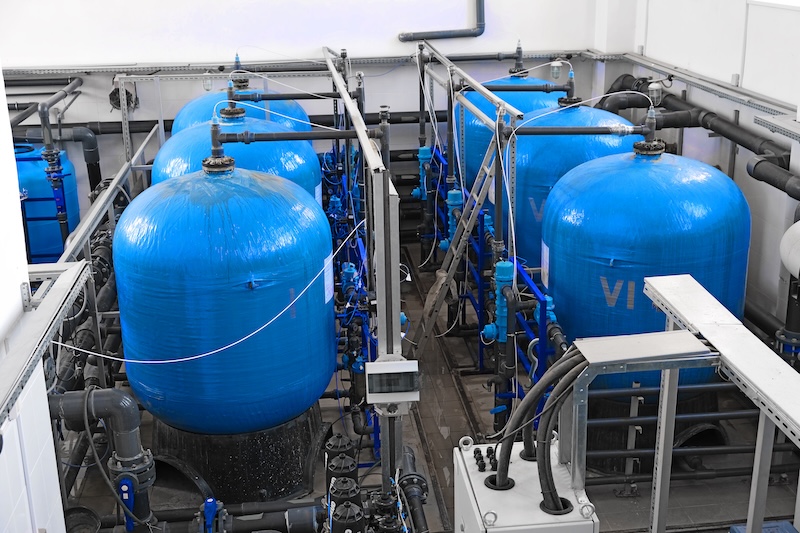
A strong evaporative cooling plan connects the cooling system to the waste management process. That means water quality data, sampling frequency, storage capacity, transportation needs, and wastewater treatment options should all fit the same operating model.
Centralized wastewater treatment can be useful when a facility does not want to manage every treatment step on-site. Cooling tower blowdown and other non-hazardous industrial wastewater streams may be better suited to a dedicated treatment pathway, especially when the site needs dependable handling rather than a custom in-house system.
Industrial vacuum services can also support the less predictable side of the work. Sumps, trenches, tanks, and other collection points can accumulate solids or residual material that make water handling harder over time.
Temporary storage may become part of the plan during cleanouts, maintenance windows, or higher-volume events. Frac tanks and similar storage options can help hold liquid waste while teams coordinate testing, transport, treatment, or staged disposal.
Broad industrial services may also be needed when water handling overlaps with tank cleaning, pit cleaning, sludge removal, or facility maintenance. Treating cooling wastewater as part of the whole site, rather than as an isolated utility drain, reduces the chance that one missed stream becomes a larger operational problem.
The Best Cooling Choice Still Needs an After-Use Plan
Evaporative cooling can be a sound efficiency choice, especially where the energy and operating profile make sense. The problem appears when the cooling discussion stops at performance and does not carry through to wastewater treatment, storage, documentation, and discharge planning.
Water cooling in data centers should be evaluated alongside water quality, local utility limits, treatment capacity, and the practical realities of collection and hauling. The better question is not just how much water the system uses, but what happens to the portion that does not evaporate.
Facilities that track data center water usage with that full pathway in mind are better positioned to avoid rushed decisions. They can compare reuse, pretreatment, sewer discharge, off-site wastewater treatment, and temporary storage before a maintenance event or discharge question turns into an urgent constraint.
Plan Evaporative Cooling Wastewater Before It Becomes a Bottleneck
Evaporative cooling can support efficient data center operations, but the wastewater it creates deserves the same level of planning as the cooling equipment itself.
Environmental Remedies helps facilities think through wastewater treatment, storage, hauling, and disposal needs tied to industrial and utility water streams. That support can be especially useful when blowdown, cleanouts, or high-volume maintenance events need a coordinated path.
Connect with our team today to review your evaporative cooling wastewater needs before the next cooling season, expansion, or maintenance window puts added pressure on your facility team.
Frequently Asked Questions
Q: What is cooling tower blowdown?
A: Cooling tower blowdown is water intentionally discharged from a cooling tower system to control the buildup of dissolved minerals, treatment chemicals, and suspended solids. Without periodic blowdown, scaling, corrosion, and fouling can reduce cooling system efficiency.
Q: Does cooling tower blowdown require wastewater treatment?
A: In many cases, yes. Blowdown water may contain elevated concentrations of dissolved solids, treatment chemicals, and other contaminants that require characterization before discharge, reuse, or off-site treatment. Local sewer authorities and permit requirements often determine the level of treatment needed.
Q: How does evaporative cooling affect data center water usage?
A: Evaporative cooling reduces heat through water evaporation, which increases direct water consumption. Water is lost through evaporation, drift, leaks, and blowdown, making water management an important part of overall data center operations.
Q: Can cooling tower blowdown be reused?
A: Some facilities can reuse blowdown water for non-portable applications such as landscape irrigation, dust suppression, or industrial processes. Reuse opportunities depend on water quality, local regulations, and treatment.
Q: What should data centers consider when planning wastewater management?
A: Facilities should evaluate wastewater volumes, water chemistry, storage requirements, treatment options, discharge limitations, hauling logistics, and emergency response before cooling systems are commissioned.