

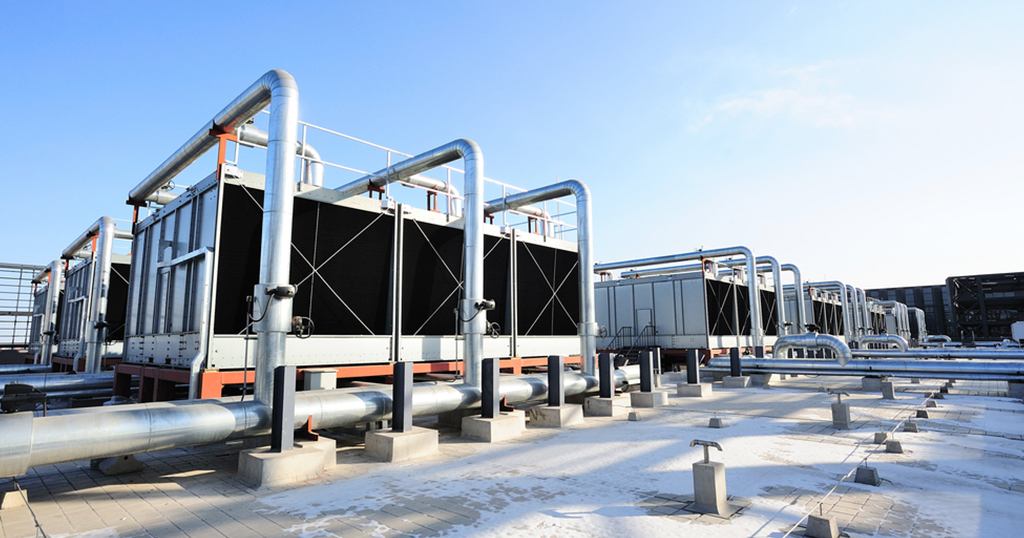


A cooling tower can keep data center equipment from overheating while quietly producing a separate wastewater stream. In systems that use evaporative cooling, the same process that removes heat also concentrates minerals in the water left behind. Operators eventually have to release some of that water as blowdown.
For facilities responsible for data center water cooling, blowdown deserves its own operating plan. Discharge volume, water chemistry, and the available wastewater treatment route all affect how consistently a cooling tower can run.
How Evaporative Cooling Creates Blowdown
In a typical water-cooled data center, heat moves from the computing equipment through cooling systems and into a condenser water loop. The cooling tower releases that heat as a small portion of recirculating water evaporates. The Department of Energy’s data center cooling guidance illustrates how this arrangement works.
In evaporative cooling systems, evaporation removes relatively pure water, not the dissolved minerals circulating with it. Calcium, magnesium, silica, and other constituents remain in the system and become more concentrated with each pass. Treatment chemicals added to control corrosion, scale, and biological growth also influence the water’s composition.
Blowdown is the controlled removal of concentrated water from the tower. Fresh makeup water replaces the amount lost through evaporation, blowdown, and smaller losses such as drift. Unlike the water evaporated into the air, blowdown is a liquid stream that needs an approved destination.
Why Cycles of Concentration Matter
Cycles of concentration describe how concentrated the circulating tower water has become compared with the makeup supply. A tower operating at four cycles, for example, has roughly four times the concentration of a suitable conservative dissolved constituent in its circulating water as in its incoming water.
The relationship helps operators understand the tradeoff between water conservation and chemistry limits. Lower cycles mean more water must be discharged to prevent mineral buildup. Higher cycles can reduce blowdown volume, but concentrating the water too far increases the potential for scale, corrosion, and treatment problems.
The Department of Energy’s cooling tower guidance estimates that raising cycles from three to six can reduce makeup-water demand by 20% and blowdown by 50%. Actual savings depend on the source water and treatment program, so those figures are not operating targets for every facility.
For data center water cooling systems using evaporative cooling, maximizing cycles without checking water quality can simply trade lower wastewater volume for a more difficult discharge stream. The useful target is the highest sustainable operating range that protects equipment and meets the facility’s water-management requirements.
What Is in Cooling Tower Wastewater?
Blowdown from evaporative cooling is not automatically hazardous, but it should not be treated as clean utility water either. Its composition depends on incoming water, tower operation, chemical dosing, and maintenance conditions. Elevated dissolved solids may appear alongside corrosion inhibitors, biocides, suspended particles, and metals released from system components.
In evaporative cooling systems, conductivity provides a practical indicator of dissolved ionic material, but it cannot identify every chemical in the stream. Water testing may also need to consider pH, hardness, chloride, silica, metals, and specific treatment additives. The receiving sewer authority or treatment facility determines which parameters matter for acceptance
Routine blowdown should also be distinguished from cleaning and commissioning wastewater. A basin cleanout or pipe flush may introduce sediment and chemical residues absent from normal operations. The site’s existing guidance on flush water chemistry explains why those streams may need separate handling.
Monitor Blowdown Before It Becomes a Problem
Reliable evaporative cooling oversight uses both instruments and operating records. Conductivity sensors can trigger automatic blowdown when the circulating water reaches a defined setpoint. Operators should compare sensor readings with independent measurements and review the chemical-treatment provider’s results rather than assuming the controls remain accurate indefinitely.
Metering makeup water and blowdown also helps identify unexpected losses. Unexplained changes can point toward a leaking valve, overflow, incorrect controller settings, or shifts in water demand. Trends are more useful than isolated readings because cooling loads and seasonal conditions vary.
Physical maintenance matters as well. The Department of Energy’s side-stream filtration guidance explains how filtering a portion of the circulating water can reduce suspended solids and fouling. Filtration does not, however, remove every dissolved contaminant or eliminate the need for blowdown and chemical treatment.
Where Can Cooling Tower Blowdown Go?
The discharge destination determines how evaporative cooling blowdown must be handled. A municipal sanitary sewer may be an option when the facility meets the receiving utility’s requirements. The EPA National Pretreatment Program establishes a framework for controlling industrial and other nondomestic wastewater entering publicly owned treatment works, with local standards and restrictions also relevant.
Direct discharge to surface water follows a different regulatory pathway. EPA’s industrial wastewater guidance explains the permitting framework for industrial point-source discharges. Neither a sanitary sewer connection nor an existing site drainage pipe automatically authorizes blowdown disposal.
Some facilities can reuse suitably treated water, while others need on-site pretreatment or off-site management. The right choice depends on the sample results, discharge approvals, equipment capacity, and acceptance criteria. A planned route also reduces the data center wastewater risks associated with sending an uncharacterized stream to the wrong destination.
Match Wastewater Treatment to the Actual Stream
Reducing blowdown volume in evaporative cooling systems can lower hauling or discharge demand, but the remaining water may carry more concentrated dissolved solids. A basic solids filter cannot solve a dissolved-salts problem, just as a process designed for mineral removal may not address every residual treatment chemical.
Before reusing evaporative cooling blowdown, facilities should establish the required water quality for its next application. Depending on the stream, suitable treatment might involve clarification, filtration, chemical adjustment, or membrane processes. Each method can produce residual material requiring separate handling, and no single treatment train fits every cooling tower.
When on-site options are limited, industrial wastewater treatment services may provide a receiving route for suitable non-hazardous streams following testing and approval. Sites weighing offsite wastewater treatment should account for transportation, temporary storage, and receiving capacity rather than comparing processing costs alone.
Plan for Routine Operation and Maintenance Events
The steady blowdown rate is only part of the water-handling picture for data center water cooling systems that use evaporative cooling. Cooling tower cleaning, system drains, and unexpected repairs can create short periods of higher flow or significantly different water quality. Treating those events as routine blowdown may leave a facility without enough storage or an appropriate receiving option.
A practical evaporative cooling plan identifies normal and peak wastewater volumes, sampling locations, discharge controls, storage capacity, and responsible personnel. For larger cleanouts, an industrial waste transport solution must match the liquid or residual material and the destination approved to receive it.
Documenting blowdown trends, maintenance changes, sample results, and disposal decisions also makes it easier to investigate recurring problems. Cooling and wastewater teams can then use the same operating information instead of making decisions after a holding tank fills or discharge limits become an issue.
Frequently Asked Questions About Evaporative Cooling and Cooling Tower Blowdown
What causes cooling tower blowdown in evaporative cooling systems?
Cooling tower blowdown occurs when evaporative cooling concentrates dissolved minerals and other substances in recirculating water. As relatively pure water evaporates to remove heat, minerals such as calcium, magnesium, and silica remain behind. Operators periodically discharge a portion of this concentrated water and replace it with fresh makeup water to help control scaling, corrosion, and water chemistry.
How does evaporative cooling affect wastewater quality in data centers?
Evaporative cooling affects wastewater quality by increasing the concentration of dissolved solids, treatment chemicals, and other constituents in cooling tower water. Depending on the makeup water and operating conditions, blowdown may contain minerals, corrosion inhibitors, biocides, suspended particles, and metals. Data centers should evaluate wastewater chemistry before selecting an appropriate treatment or discharge method.
How do cycles of concentration affect cooling tower blowdown?
Cycles of concentration measure how concentrated cooling tower water becomes compared with incoming makeup water. Higher cycles generally reduce blowdown volume and makeup-water demand, but they also increase dissolved mineral concentrations. Operating at excessively high cycles can contribute to scaling, corrosion, and wastewater treatment challenges. Facilities should establish operating limits based on water chemistry and equipment requirements.
Can cooling tower blowdown from data centers be reused or treated?
Yes. Cooling tower blowdown may be suitable for treatment or reuse depending on its chemical composition and the water quality required for its intended application. Treatment options may include clarification, filtration, chemical adjustment, or membrane processes. Facilities should evaluate contaminants, treatment requirements, and residual waste before determining whether reuse or off-site wastewater treatment is appropriate.
Where can data centers discharge cooling tower blowdown?
Data centers may discharge cooling tower blowdown to an approved municipal sanitary sewer, manage it through authorized treatment or reuse systems, or arrange off-site wastewater treatment. The appropriate destination depends on wastewater characteristics, local discharge requirements, and receiving-facility acceptance criteria. Discharging blowdown to a sewer or drainage system without confirming authorization can create compliance risks.
Keep Evaporative Cooling and Wastewater Planning Connected
Evaporative cooling helps data centers manage heat, but the resulting cooling tower blowdown must be managed as carefully as the water entering the system. Understanding concentration cycles, tracking chemistry, and confirming discharge routes can reduce unnecessary wastewater volume without compromising cooling performance. A sound plan also accounts for periodic maintenance streams that differ from everyday blowdown.
Environmental Remedies supports facilities with characterization, non-hazardous wastewater treatment, and waste-handling coordination when cooling operations generate streams that need an off-site solution.
Reach out to discuss your cooling tower wastewater requirements before the next maintenance or discharge decision.