




A cooling system flush affects uptime, maintenance windows, wastewater management, and the equipment that keeps heat moving away from racks. For data center operations, the goal is not just cleaner water lines. The better goal is a planned cooling system flush that restores flow, supports preventive maintenance, and keeps cooling tower cleaning from becoming a surprise outage.
Cooling is one of the largest support loads in a facility. The U.S. Department of Energy notes that data center cooling can account for up to 40% of total data center energy use, which gives water-side maintenance real operational weight.
Why flush work can strain data center operations
A cooling system flush sounds routine until it enters a live facility. Flow paths may need isolation, backup cooling may need staging, tower basins may need draining, strainers may need cleaning, and flush water may need capture before the first valve moves.
Data center operations depend on stable temperature control, predictable redundancy, and short recovery windows. Uptime Institute’s 2026 outage analysis notes that outage prevention remains a central focus as operators manage system complexity, grid pressure, and AI-driven workloads.
The strongest plans start with load awareness. Teams need to know which loops can be isolated, which systems can carry the load, where temporary cooling may be needed, and how water will be handled before work begins.
Preventive maintenance works when the scope is defined early
Preventive maintenance reduces downtime when the work scope is specific enough for operations, facilities, EHS, and vendors to follow the same plan. A vague work order that says “flush cooling system” leaves too much room for delay once crews find solids, access limits, blocked strainers, or unexpected water volume.
A useful plan defines the affected loop, expected volume, isolation sequence, target cleanliness, access points, sample points, restart steps, and contingency actions. ASHRAE’s data center resources focus on guidance for cooling, energy, humidity, and operations in mission-sensitive environments, which is the broader context behind any cooling system flush.
Preventive maintenance also needs sequencing that respects redundancy. A flush may be scheduled during lower-load periods, phased by loop, paired with cooling tower cleaning, or grouped with other planned work so the facility avoids repeated disruptions.
Documentation matters after the work is done. Logs of removed material, water volume, disposal path, observations, and follow-up recommendations give maintenance teams a clearer baseline before the next cooling system flush.
Wastewater management can make or break the maintenance window
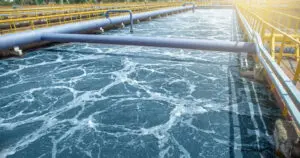
Flush water creates downtime risk when handling is improvised. A crew can finish mechanical cleaning on time and still lose hours if water staging, transport, disposal approval, or treatment planning has not been settled.
The EPA says the NPDES program establishes discharge limits and conditions for industrial and commercial sources based on facility activity and the receiving water or treatment system. That does not mean every flush stream follows the same path, but it does mean wastewater management decisions should be verified before work starts.
Cooling systems can produce streams that vary by source water, treatment chemistry, corrosion control, solids loading, and prior maintenance history. Data centers may also have construction flush water, rinse water, cooling tower blowdown, basin cleanout water, and sludge-like residues moving through different handling paths.
Good wastewater management reduces the chance that a maintenance window stalls after cleaning is complete. Vacuum trucks, temporary containment, sampling, profiling, treatment, transport, and disposal coordination can be lined up before the system is opened.
Cooling tower cleaning should support the flush sequence

Cooling tower cleaning is tied to flush planning because towers collect sediment, biological growth, scale, and airborne debris that can move through the system. The CDC notes that scale, corrosion, sediment controls, and system cleaning are part of cooling tower operations and Legionella prevention.
A tower basin that has not been cleaned can send loosened material into strainers, pumps, heat exchangers, and low-flow points during restart. Pairing cooling tower cleaning with the right flush sequence can reduce that risk and help the system return to steadier operation.
Cooling tower cleaning should be timed so debris removal, disinfection steps, basin washdown, and water collection do not interfere with available cooling capacity. Larger facilities may need to rotate towers, stage temporary equipment, and plan wastewater management around each phase.
Preventive maintenance is stronger when cooling tower cleaning findings are carried forward. Heavy scale, excessive sediment, recurring biological fouling, or unusual corrosion can show that treatment chemistry, filtration, blowdown control, or cleaning frequency needs adjustment before the next cooling system flush.
Water chemistry and access details deserve early attention
Cooling water chemistry can change the size of the job. Makeup water quality, cycles of concentration, corrosion inhibitors, biocides, suspended solids, glycol blends, metals, and deposits can all affect how crews clean, collect, and manage water from the system.
Sampling before a cooling system flush gives teams a better view of solids, pH, conductivity, metals, biological material, and treatment residuals. Sample results can guide wastewater management and help decide whether off-site treatment, on-site pretreatment, or direct discharge review is the right path.
Access planning can be just as important as chemistry. Cooling work may involve rooftops, basins, mechanical rooms, pits, tanks, and pipe galleries, so teams should account for lockout coordination, fall protection, confined-space review, truck staging, and hose routing.
Hauling logistics belong in the same discussion. If vacuum trucks, tankers, roll-off containers, or temporary storage arrive late, cleaning crews may have to pause while water and solids wait for a place to go.
A reliable restart is the real test
The flush is not finished when water stops moving through the hose. A successful cooling system flush ends when flow is stable, strainers remain clear, pumps run normally, temperatures are under control, and the team has a record of what changed.
Restart planning should include controlled refill, venting, pressure checks, sensor review, water treatment adjustment, and an observation period long enough to catch early fouling or flow restrictions. Data center operations benefit when facilities teams treat the first hours after restart as part of the work, not as an unrelated handoff.
Post-work reporting closes the loop. A concise summary of findings, photos, solids removed, water volume, industrial vacuum services, disposal route, and recommended next steps helps preventive maintenance shift from reactive cleaning to measured system care.
Reliable records also help plan the next cooling tower cleaning cycle. When maintenance history shows recurring debris, scaling, or water quality swings, the next outage window can be shorter, cleaner, and easier to defend.
Plan Your Next Cooling System Flush With Less Disruption
Downtime risk drops when a cooling system flush is planned around operating load, water chemistry, access, wastewater management, and restart needs. Cooling tower cleaning and preventive maintenance should work from the same schedule.
Environmental Remedies supports data center operations with coordinated cleaning, wastewater treatment, transportation, and disposal support for complex industrial maintenance windows.
Reach out to plan a cooling system flush that keeps the work organized from assessment through final water handling.
Frequently Asked Questions
1. What is a cooling system flush?
A cooling system flush removes accumulated sediment, scale, corrosion products, and other contaminants from cooling water loops to restore system performance and improve heat transfer.
2. How often should a cooling system flush be performed?
The frequency depends on system design, water chemistry, operating conditions, and preventive maintenance schedules. Facilities often determine timing through inspections, water testing, and equipment performance trends.
3. Can a cooling system flush reduce downtime?
Yes. When properly planned, a cooling system flush helps maintain flow, improve cooling efficiency, reduce unexpected equipment failures, and support more predictable maintenance windows.
4. What happens to flush water after cleaning?
Flush water may require sampling, characterization, treatment, transportation, or disposal depending on its chemistry and applicable environmental requirements.
5. Why should cooling tower cleaning be performed during a flush?
Cleaning cooling towers during a flush removes sediment and biological buildup that could otherwise circulate through pumps, heat exchangers, and piping after the system restarts.